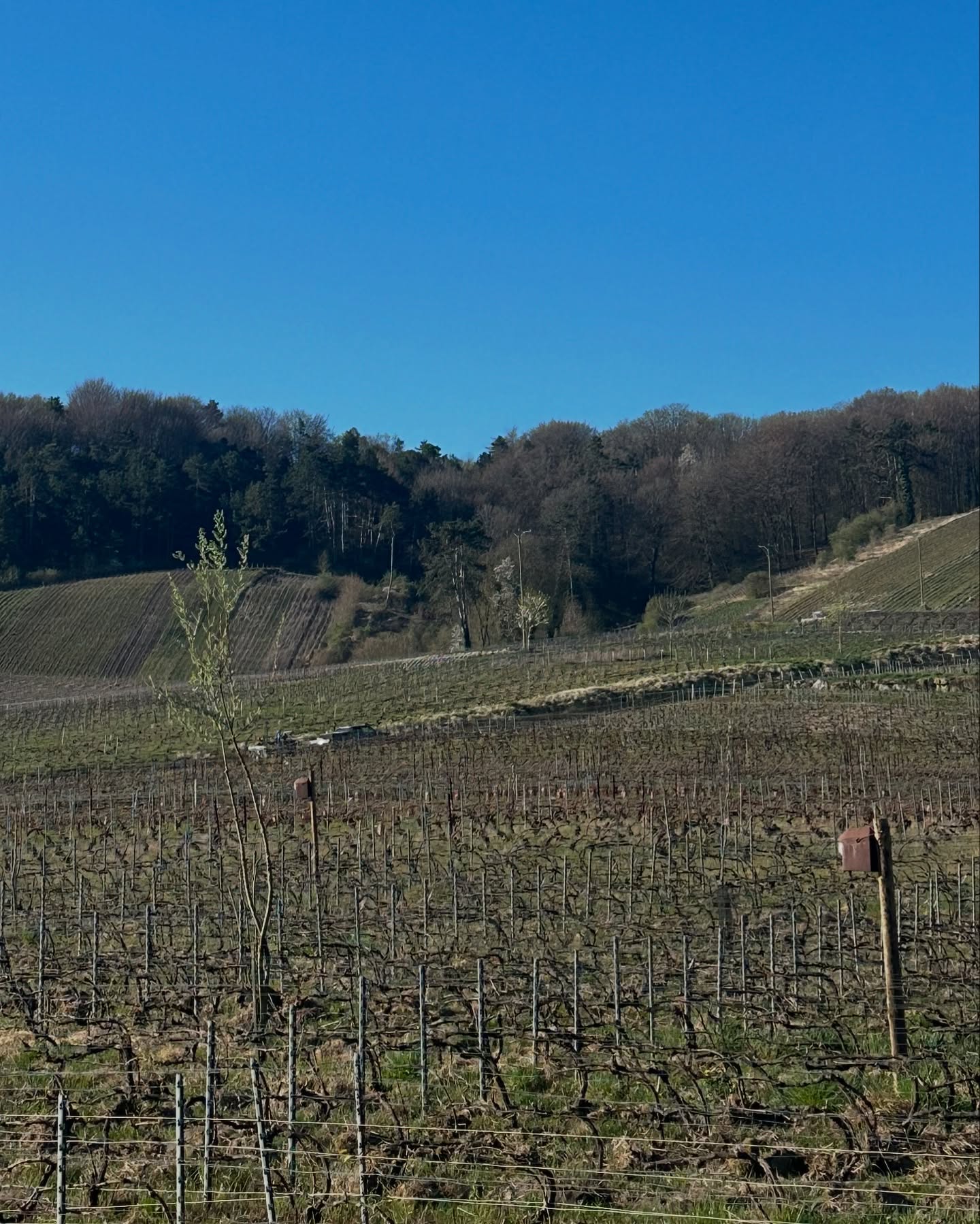
Chamery is fast becoming a hotspot for biodynamic winemaking. According to Bonnet-Ponson’s winemaker, around 20% of the producers in the village are now working biodynamically, a crazy number! On Chamery’s higher slopes, Chardonnay dominates, thanks its chalky soils. Meanwhile, the heavier soils in the lower parts of the village are typically planted with Pinot Meunier and Pinot Noir. Of course, these patterns are not set in stone. Bonnet-Ponson’s current winemaker, for instance, shared that his father was a Pinot Noir lover, which led to a stronger focus on Pinot Noir in their vineyards today. Bonnet-Ponson is also planting trees, which reminded me of a similar project at Pian dell’Orino in Tuscany. They’re planting apple trees, along with native species like maple and linden. The linden, in particular, was chosen for its non-competitive nature and insect-friendly properties, contributing, hopefully, to a more balanced ecosystem. They are experimenting with slightly higher vine training than is traditional in Champagne. New projects are rare in Champagne. While the region’s tightly controlled regulations are part of what has made Champagne a symbol of excellence, they also leave little room for innovation. Speaking of breaking new ground, Jean Servagnat is a name worth noting. A rare self-made grower in a region dominated by multi… multigenerational estates, he owns a few hectares in Coulommes-la-Montagne. We had the chance to taste his low-intervention Champagnes at Bonnet-Ponson, and his wines left a lasting impression. His blend, based largely on Pinot Meunier, was both vibrant and seductively ripe. Particularly memorable was Les Galipes de Coulommes, which features a significant proportion of reserve wines, definitely a Champagne to remember.
Chamery is fast becoming a hotspot for biodynamic winemaking. According to Bonnet-Ponson’s winemaker, around 2...
1 / 6